
Surprising Costs Covered by Your HSA
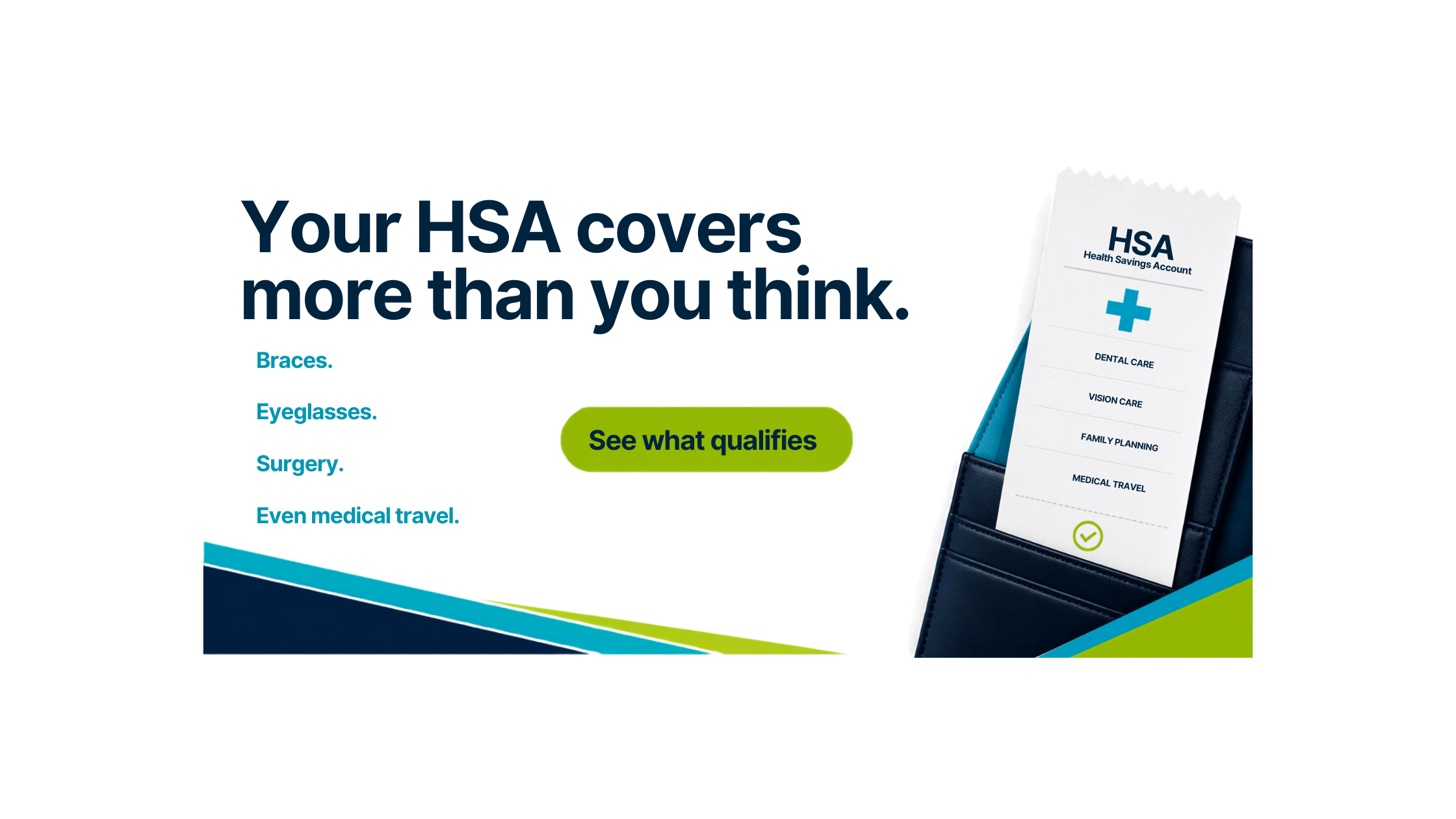
When most people think of a Health Savings Account (HSA), they think of using it for doctor co-pays or prescription medications. But did you know your HSA can cover everything from laser eye surgery to travel expenses for medical procedures?
Understanding what counts as a qualified medical expense can reveal surprising ways to save money tax-free. Here is a practical breakdown of what your HSA can cover:
- Dental Care: You can use an HSA to cover major dental bills, like braces. It can also help cover any routine needs, such as cleanings and fluoride treatments.
- Vision Care: Your health insurance may not cover a new pair of eyeglasses or your contact lens solution, but those are qualified medical expenses. And what’s even better: laser eye surgery is also a qualified medical expense.
- Medical Care: Your HSA money pays for healthcare costs of all sizes. This includes predictable, routine care like chiropractic visits, as well as sudden emergencies like needing crutches after an injury.
- Family Planning: HSA funds can help offset the costs of family planning. You can use your HSA for birth control pills, pregnancy tests, and fertility treatments.
- Postpartum Care: When adding a new baby to your family, costs can pile up quickly. Fortunately, your HSA can cover breastfeeding supplies, including a breast pump.
- Some Insurance Premiums: Your HSA can be used to pay for premiums on long-term care insurance, COBRA (health insurance you might use if you become unemployed), and even Medicare if you are age 65 or older.
- Health Care-Related Travel: When you have to travel for surgery or medical treatment, HSA funds can help you get there. They can also be used to cover hotel and meal expenses during your stay.
So, what doesn’t qualify?
As a general rule, HSA funds cannot be used for expenses that do not directly treat or prevent a physical or mental illness, or for treatments that do not meaningfully promote the proper function of the body. Nutritional supplements and weight loss programs not prescribed by a physician are examples of expenses that would not be covered by your HSA.
A Quick Tip for Account Holders
Remember that expenses are only eligible if they are incurred after your HSA was formally established. Additionally, tax rules can vary by state, so it’s always a good idea to keep itemized receipts for your records and consult a qualified tax professional or review IRS Publications 502 and 969 if you have questions about specific purchases.